Recent Posts













It's all in the mind
I shall summarise this story I experienced a few months ago. >friend already stressed and mentally vulnerable >goes alone to Manikarnika Ghat at midnight, sits for hours >comes back to hostel, starts feeling watched, hears knocks/whispers >parano...
















Indian Urban legends thread
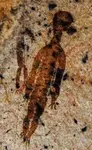
Jodhpur Baby was a strange humanoid body discovered in Jodhpur's Bawadi village, where the villagers were digging a tube well to fetch water. The creature resembles a small humanoid creature, almost human in nature. It appears to be 5 inches in heig...








2TAUGg
No.841
Punarjanam Stories.
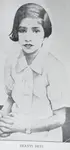
>Shanti Devi was born in Delhi, India.[1] As a young girl, she began to notice that she remembered details of a past life. According to these accounts, when she was about four years old, she told her parents that her real home was in Mathura where her husband lived, about 145km from her home in Delhi.
>Discouraged by her parents, she fled from home at the age of six , attempting to reach Mathura. Back home, she unequivocally stated in school that she was married and had died ten days after giving birth to a child. Interviewed by her teacher and headmaster, she used words from the Mathura dialect and divulged the name of her merchant husband, "Kedarnath Chaube". The headmaster managed to locate a merchant by the name of Kedar Nath in Mathura who had lost his wife, Lugdi Devi, seven years earlier, ten days after having given birth to a son. Kedar Nath travelled to Delhi, pretending to be his brother, but Shanti Devi immediately recognized him and Lugdi Devi's son. As she knew several details of Kedar Nath's life with his wife, he was soon convinced that Shanti Devi was indeed the reincarnation of Lugdi Devi
>The case was brought to the attention of Mahatma Gandhi who set up a commission to investigate. The commission traveled with Shanti Devi to Mathura, arriving on 15 November 1935. There she recognized several family members, including the grandfather of Lugdi Devi. She found out that Kedar Nath had neglected to keep a number of promises he had made to Lugdi Devi on her deathbed. She then travelled home with her parents. The commission's report, published in 1936, concluded that Shanti Devi was indeed the reincarnation of Lugdi Devi
2TAUGg
No.842
>>841(OP)
>A resident of Mathura, was blessed with a daughter, who was named Lugdi. When Lugdi reached the age of 10, she was married to Kedarnath Chaube, a shopkeeper of the same locality. It was the second marriage for Kedarnath, as his earlier wife had died. Kedarnath Chaube owned a cloth shop in Mathura and also a branch shop at Hardwar. Lugdi was very religious and had been to several pilgrimage places at a very young age. While on one pilgrimage, she was injured in her leg for which she had to be treated, both at Mathura and later at Agra.
>On January 18, 1902, Chaturbhuj, a resident of Mathura, was blessed with a daughter, who was named Lugdi. When Lugdi reached the age of 10, she was married to Kedarnath Chaube, a shopkeeper of the same locality. It was the second marriage for Kedarnath, as his earlier wife had died. Kedarnath Chaube owned a cloth shop in Mathura and also a branch shop at Hardwar. Lugdi was very religious and had been to several pilgrimage places at a very young age. While on one pilgrimage, she was injured in her leg for which she had to be treated, both at Mathura and later at Agra
>When Lugdi became pregnant for the first time, her child was stillborn following a Cesarean section. For her second pregnancy, the worried husband took her to the government hospital at Agra, where a son was born, again through a Cesarean on September 25, 1925. Nine days later, however, on October 4, Lugdi's condition deteriorated and she died
2TAUGg
No.843
>>842
>One year ten months and seven days after Lugdi's death, on December 11, 1926, Babu Rang Bahadur Mathur of Chirawala Mohulla, a small locality of Delhi, was blessed with a daughter, whom they named Shanti Devi. She was just like any other girl except that until the age of four she did not speak much. But when she started talking, she was a different girl--she talked about her "husband" and her "children."
> She said that her husband was in Mathura where he owned a cloth shop and they had a son. She called herself Chaubine (Chaube's wife). The parents considered it a child's fantasy and took no notice. They got worried, however, when she talked repeatedly about it and, over time, narrated a number of incidents connected with her life in Mathura with her husband. On occasions at meals, she would say, "In my house in Mathura, I ate different kinds of sweets." Sometimes when her mother was dressing her, she would tell what type of dresses she used to wear. She mentioned three distinctive features about her husband: he was fair, had a big wart on his left cheek, and wore reading glasses. She also mentioned that her husband's shop was located in front of Dwarkadhish temple.
2TAUGg
No.844
>>843
>By this time Shanti Devi was six years old, and her parents were perplexed and worried by such statements. The girl even gave a detailed account of her death following childbirth. They consulted their family physician, who was amazed how a little girl narrated so many details of the complicated surgical procedures. The mystery, thus, continued to deepen. The parents started thinking that these memories might have been of a past life.
>As the girl grew older, she persisted in asking her parents to be taken to Mathura. She, however, never mentioned her husband's name up to the age of eight or nine. It is customary in India that wives do not utter the name of their husbands. Even when specifically asked, she would blush and say that she would recognize him, if taken there, but would not say his name. One day a distant relation, Babu Bishanchand, a teacher in Ramjas High School Daryaganj in Delhi, told Shanti Devi that if she told him her husband's name, he would take her to Mathura. Lured by this offer, she whispered into his ear the name Pandit Kedarnath Chaube. Bishanchand then told her that he would arrange for the trip to Mathura after due inquiries. He wrote a letter to Pandit Kedarnath Chaube, detailing all the statements made by Shanti Devi, and asked him to visit Delhi. Kedarnath replied confirming most of her statements and suggested that one of his relatives, Pandit Kanjimal, who lived in Delhi, be allowed to meet this girl.
2TAUGg
No.845
>>844
>Kanjimal was so impressed that he went to Mathura to persuade Kedarnath to visit Delhi. Kedarnath came to Delhi on November 12, 1935, with Lugdi's son Navneet Lal and his present wife. They went to Rang Bahadur's house the next day. To mislead Shanti Devi, Kanjimal introduced Kedarnath as the latter's elder brother. Shanti Devi blushed and stood on one side. Someone asked why she was blushing in front of her husband's elder brother. Shanti said in a low firm voice, "No, he is not my husband's brother. He is my husband himself." Then she addressed her mother, "Didn't I tell you that he is fair and he has a wart on the left side cheek near his ear
2TAUGg
No.846
>>845
>She then asked her mother to prepare meals for the guests. When the mother asked what should she prepare, she said that he was fond of stuffed potato parathas and pumpkin squash. Kedarnath was dumbfounded as these were his favorite dishes. Then Kedarnath asked whether she could tell them anything unusual to establish full faith in her. Shanti replied, "Yes, there is a well in the courtyard of our house, where I used to take my bath."
Shanti was emotionally overwhelmed on seeing Navneet, the son in her previous life. Tears welled in her eyes when she hugged him. She asked her mother to bring all her toys and give them to Navneet. But she was too excited to wait for her mother to act and ran to bring them. Kedarnath asked her how she had recognized Navneet as her son, when she had seen him only once as an infant before she died. Shanti explained that her son was a part of her soul and the soul is able to easily recognize this fact.

6MSvJA
No.847
>>846
Interesting des
2TAUGg
No.848
>>847
I think there are more such cases I will see if I can find one. You can also share your own
2TAUGg
No.849
>>841(OP)
Here is one about Titu Singh.
>From a really young age, Titu displayed an unusual awareness and knowledge far beyond his years. At just eighteen months old, he startled his family by asking his grandfather to care for his wife and children, insisting that he belonged to Agra, not Baad. As he grew older, his complaints about the family's lifestyle — criticising his mother’s attire and the family’s modest means were consistent and unsettling. He vividly described owning a big house, a shop in Agra's Sadar Bazaar, and leading a life of luxury, all of which were far removed from his current reality.
>Titu’s persistent memories prompted his family to delve deeper. One day, in April 1987, Titu, distressed when his father traveled to Agra without him, revealed a crucial detail: "I have a shop of transistor radios and I was a big smuggler and gunda. I am the owner of Suresh Radio." Acting on this clue, Titu's brother and a friend sought out the shop and met Uma Verme, the widow of Suresh Verma — a notorious smuggler and shop owner who had been shot dead in 1983.
>When members of Suresh’s family visited Baad, Titu’s recognition of them and his detailed recounting of Suresh’s life stunned everyone. He accurately named Suresh's children, described their home, and even remembered specific details about Suresh’s death. His knowledge and behavioural traits strikingly mirrored those of Suresh, including a hot temper and a penchant for asserting dominance.
>The physical evidence added another layer of mystery. Titu had a small circular birthmark on his right temple, resembling a bullet entry wound, and several marks on the back of his skull, similar to exit wounds. These birthmarks matched the locations of Suresh's fatal injuries as recorded in his post-mortem report. Titu's behavioral traits were also eerily similar to Suresh's. He was active, intrepid, and had a violent streak, much like Suresh, who had successfully defended himself against previous assassination attempts. Titu’s family noted his ability to operate a car’s tape deck and drive a car, skills he had never been taught but which were second nature to Suresh.
1iKihr
No.866
>>849
Wow they are speaking non-Brahmin Braj.
Chaubes are traditional priests of ancient temples of Mathura.
1iKihr
No.867
>>866
However nowadays most political power is held by Goswamis due to their historical affiliation with Rajasthani Rajput Royality.
z2ptXL
No.872
>>866
Yes
z2ptXL
No.873
>>867
Goswami? Shouldn't tht be up , cause I have never heard of a Goswami connected to Rajasthan
n5VpRm
No.874
z2ptXL
No.875
>>841(OP)
Here's another info on this btw.
n5VpRm
No.876